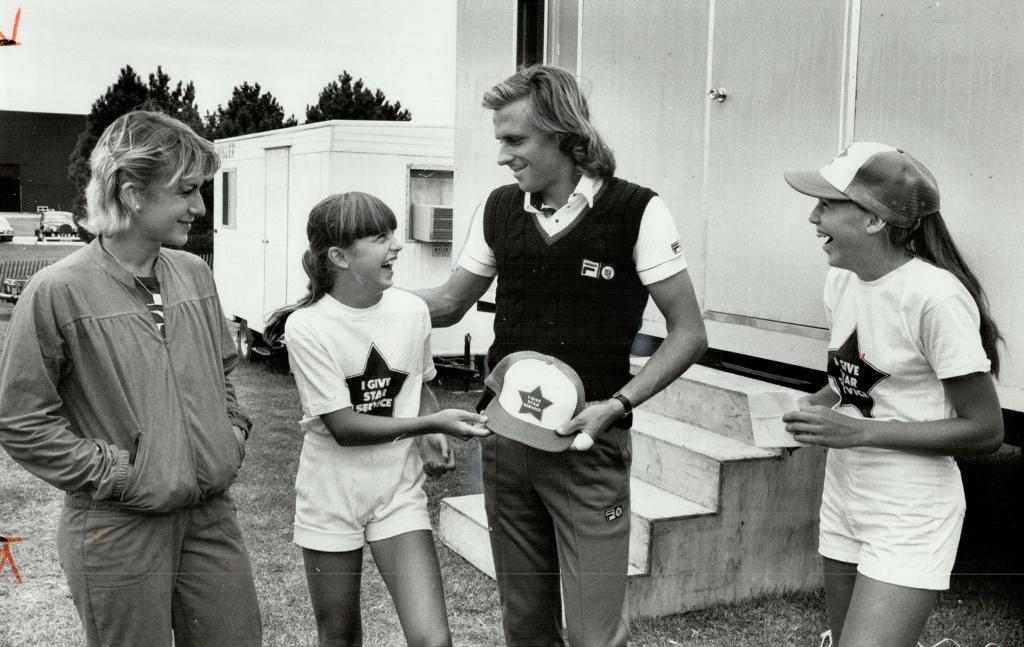
The man who taught me to play tennis—Santiago “Chago” Jáquez—played doubles against Björn Borg at the Sugar Cane Junior Tennis Championships in 1972, held at the Hotel Embajador in Santo Domingo, Dominican Republic (DR). I had the good fortune to train with Chago when he was the tennis professional at El Club Falcondo in the DR in the early ’80s. I especially remember his fascinating stories about his own tennis career. To me, they felt like they were more than tennis lessons; they were life lessons. Tennis has taught me many things. Perhaps the most important lesson came from Borg himself, who said his success stemmed from his ability to play one point at a time. In simple terms, if you have a mountain to climb, focus on the present and take one step at a time.
Reporter: What was the most important reason for your incredibly successful tennis career?
Björn Borg: It was my ability to play one point at a time and not worry about what just happened or what might happen. The only thing that was important was the point to be played.
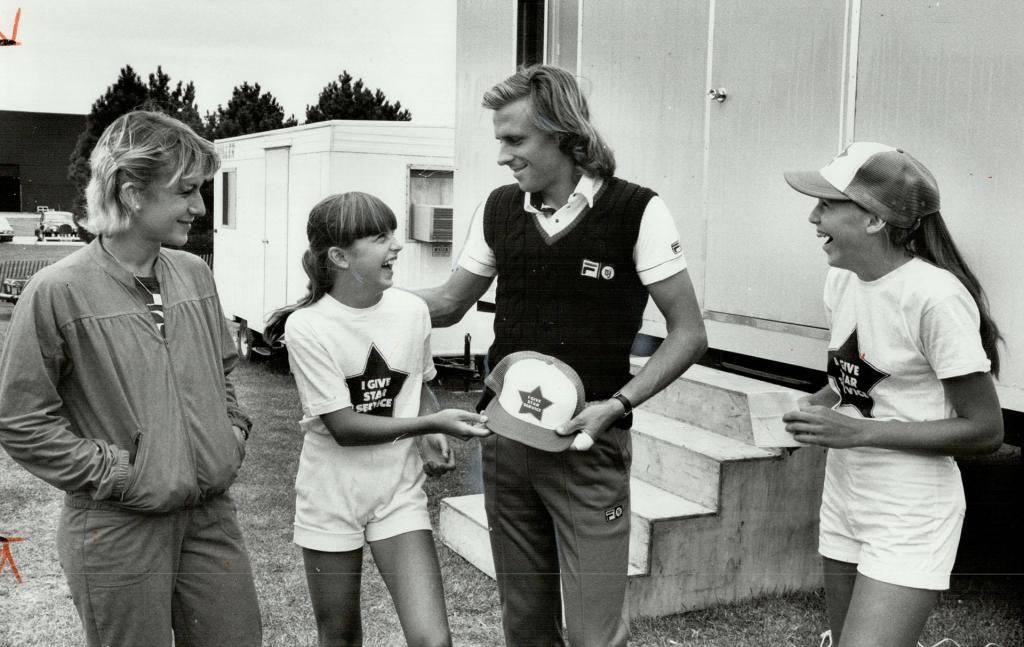
The case for Borg’s greatness
Dennis Hopper famously claimed that James Dean was the greatest actor of all time—even though Dean starred in only three major films. His career was cut short when he died in a car accident at age 24. I believe Hopper suggested that greatness is not measured by how many Oscars Dean won (none), how many films he made (three), or how long his career lasted (five years). Instead, Hopper pointed to Dean’s innovative method-acting style and his ability to improvise scenes beyond the script as marks of excellence. Hopper, a technically accomplished and classically trained actor, recognized greatness in Dean’s authentic performances that audiences had never seen before. Dean became a central figure in a movement that changed acting forever.
Similarly, Borg retired at just 26. Although he won 11 Grand Slam titles—and only four men have since won more—it was his role in transforming tennis from a traditional country-club game of skill and talent into a fiercely competitive professional sport demanding physical endurance, mental concentration, and mastery of heavy topspin that makes him, in my view, the greatest player of all time. Like James Dean in method acting, Borg was a master innovator in modern tennis. The three matches below exemplify his greatness. And, like Dean, Borg was a global superstar.
“We’re playing tennis, and he’s (Borg) playing something else.” Ilie Năstase
Borg vs Orantes, Roland Garros 1974, the breakthrough
Two years after winning the Sugar Cane Junior Tennis Championships in 1972 in my beloved DR, Borg reached the French Open final against clay-court legend Manuel Orantes. Orantes led 6–2, 7–6 when something changed. What followed was extraordinary. Through consistency and endurance, Borg persisted as Orantes began to wilt. Borg won the next three sets 6–0, 6–1, 6–1. Thanks to Borg, mental concentration and physical endurance became defining elements of professional tennis.
“He (Borg) started introducing the physical and mental thing to tennis, he played five sets at a very hard level, he started changing the way to play. After that, all the players play in the same way on all surfaces, while before there were more differences.” Manuel Orantes
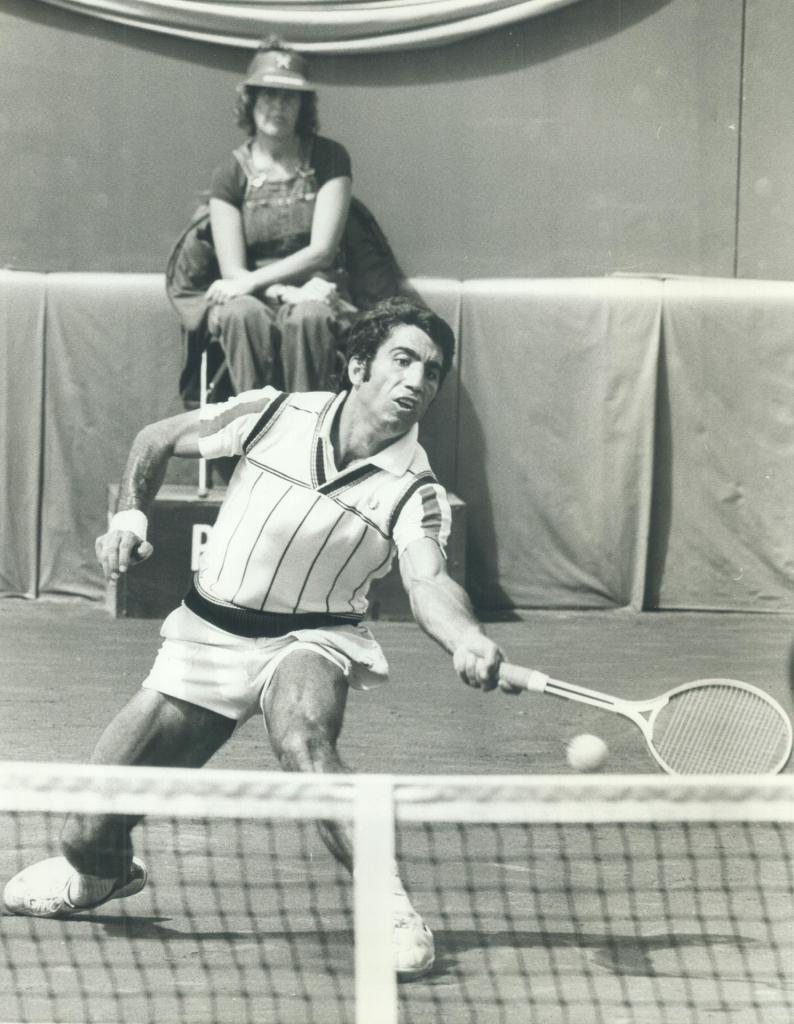
Borg vs Lendl, Roland Garros 1981, the last waltz
The 1981 French Open proved to be Borg’s final Grand Slam victory. In a grueling match, he defeated Lendl 6–1, 4–6, 6–2, 3–6, 6–1. It was the last time a player using a standard-size wooden racket defeated one using a midsize racket in a Grand Slam final. Lendl learned from the loss: talent and skill alone were no longer enough. To succeed on the professional circuit, he had to improve his fitness and concentration. The following year, Borg retired from the game he had transformed.
“In that 1981 final, I felt like I was playing well enough to win, but against Björn, ‘well enough’ was never enough. He had this unbelievable ability to lift his game in the fifth set when you were already completely spent.” Ivan Lendl
Borg vs McEnroe, Maple Leaf Gardens 1987, the return of the king
When people hear Borg versus McEnroe, they usually remember the 1980 and 1981 Wimbledon finals. I vividly remember watching those two classics with my parents and brothers on a Heathkit colour television that our dad proudly built. Yet another classic between Borg and McEnroe has been lost to time. After retiring from the professional circuit in 1982, Borg continued to play exhibition matches against active professionals—and, surprisingly, often won. In 1987, he once again met his great rival John McEnroe, still an active professional, at Toronto’s Maple Leaf Gardens. Far from rusty after five years away, Borg won 4–6, 6–2, 6–4. What makes the match especially interesting is how different Borg looked: he wore his hair short and used the Borg Donnay Graphite rather than his famous standard-size wooden Borg Donnay Pro. The match offered a glimpse of what might have been had Borg remained on the professional circuit. I have always thought that, had he found a way to manage the exhausting fandom and relentless tour, Borg would have won many more Grand Slam titles—and perhaps a US Open.
“He (Borg) had this incredible mystique. He didn’t say much, but his presence was deafening. To have that much pressure on your shoulders at such a young age and stay that poised—it was just beautiful to watch.” Bille Jean King
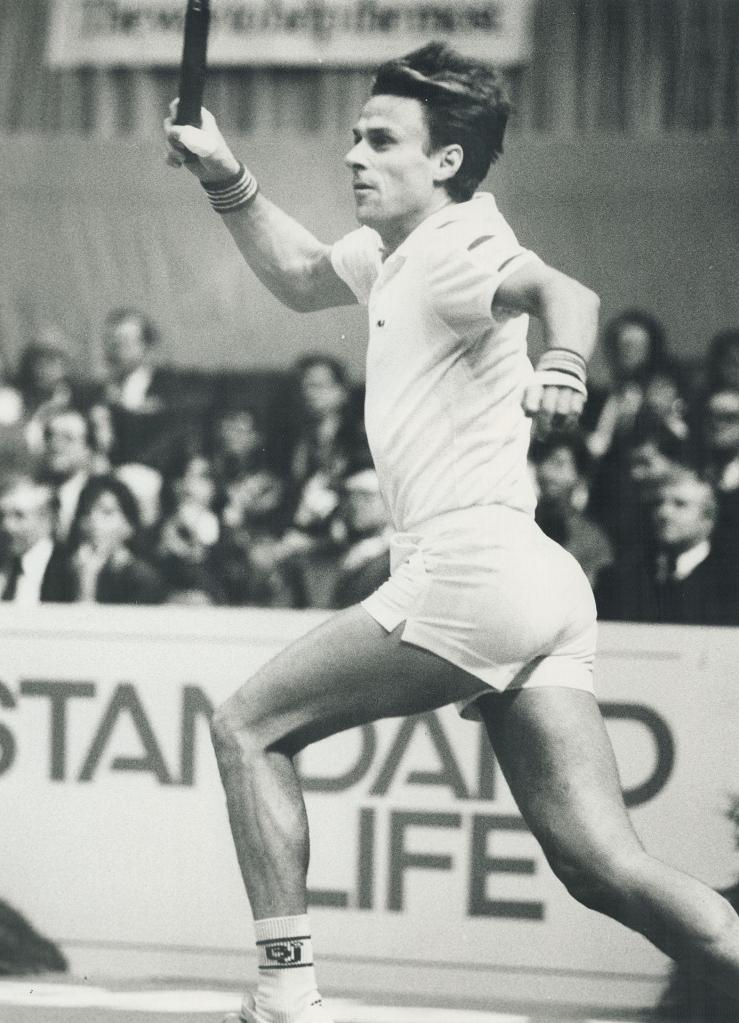
The Feast of the GOAT
With 24 Grand Slam titles, Novak Djokovic has a strong claim to recognition as the Greatest of All Time (GOAT) in men’s professional tennis. Borg himself considers Djokovic the GOAT. Yet Grand Slam totals are a modern metric; as Jimmy Connors has often maintained, they were simply not a priority during Borg’s era. Only after Pete Sampras broke Roy Emerson’s previous record and eventually reached 14 titles did the number of Grand Slams become a central goal for the sport’s elite. In 1980, I remember asking Coach Chago who the best tennis player in the world was. He replied enthusiastically, “Obviously, Borg!” Ever the curious tween, I pressed: “How do we know that for sure?” He smiled and said, “Borg won Wimbledon, and that is the greatest prize in the tennis world.” Chago was a wise tennis seer who knew everything there was to know about tennis.
In Borg’s era, there was no single, universally accepted standard for determining the world’s number one player. The Association of Tennis Professionals (ATP) had a ranking, but the ATP has noted that it was designed primarily to determine tournament seedings; it was not regarded as the authoritative system it is today. Sports magazines often selected the year’s top player through panels of experts—an indication of how unsettled the ranking system was.
Furthermore, during Borg’s peak years, the Australian Open was played in December, and several professionals—including Connors and McEnroe—often skipped it. Borg said that if he won the US Open after completing the Channel Slam (winning the French Open and Wimbledon in the same year), he would play the Australian Open in pursuit of a calendar-year Grand Slam. He competed there only once, in 1973.
Today’s metrics cannot simply be imposed on players from the 1970s and ’80s. At the time, only two weeks separated the French Open and Wimbledon; today, there are three. Even so, Borg completed the Channel Slam three consecutive times with virtually no time to rest. To this day, no one—not even Federer, Djokovic, or Nadal—has won consecutive Channel Slams.
Borg never won the US Open, but that strikes me as an anomaly—an Achilles’ heel in an otherwise extraordinary career. If we cherry-pick, we can always identify something the Big Three failed to achieve. Connors, for example, still holds the men’s record with 109 singles titles. Federer holds the record for the most consecutive weeks at number one, but the ranking system in Borg’s era was deficient. Consider Borg’s great rival Guillermo Vilas: he was ranked number two in 1977 despite winning both the French Open and the US Open that year; under today’s system, he clearly would have been number one. Yet Vilas himself said that if his best 1977 version travelled through time to face Federer in 2005, he would have been lucky to win a single game. And after all these years, no one has surpassed Borg’s record of five consecutive Wimbledon titles. Federer equaled it, but even he could not break it.
The GOAT debate is endless. I will add only this: many players helped transform tennis into the modern game it is today, but in the men’s game there was one clear leader in this transformation—Björn Borg, who was simply the best.
“We have a different game now, a different look, a different attitude, and it’s all due to Borg.” Arthur Ashe


Leave a Reply