
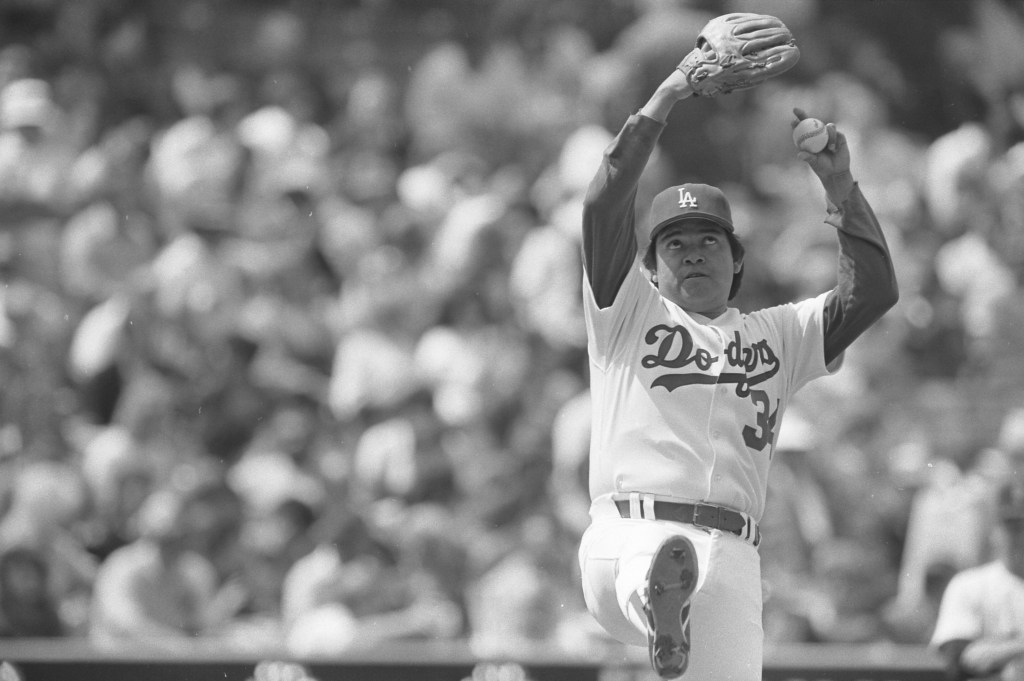
The day after the LA Dodgers clinched the World Series, all of Toronto was in a state of collective sorrow. As the days went by, people’s mood started lifting. After all the Blue Jays played with heart and losing after a double play caused by a broken bat to a team with a significantly higher budget isn’t exactly something we should be sad about. It cheered me up to see so many people proudly wearing their Jays caps and jerseys the days that followed even after such enormous disappointment. Once winter came, I even saw Blue Jays toques, which made me feel hopeful for the future of the Jays. It then occurred to me that only once before have I felt so upset after a Canadian baseball team lost an important series – the 1981 Montréal Expos would lose to the LA Dodgers in a memorable National League Championship series 3 to 2. And just like in the 2025 World Series where the Dodgers had the unbeatable pitcher Yoshinobu Yamamoto, the 1981 Dodgers also had an incredible phenom a young Mexican pitcher of Mayo and Yaqui Indigenous roots: Fernando Valenzuela.
If it weren’t for the greatness of Fernando Valenzuela a true virtuoso of the game, I am certain that the Expos would have won the 1981 World Series, since their team had an incredibly deep lineup featuring talented players such as Andrew Dawson, Gary Carter and Tim Raines just to name a few. Valenzuela’s magical screwball would tempt even the best of batters who would succumb to it and eventually ground out or strike out.
That series I was cheering for the Expos since my parents had already applied for Canadian residence back in May of 1981 and I thought of the Expos as the team of my new country Canada. When we finally moved to Scarborough from the Dominican Republic in the summer of 1982, I was pleasantly surprised that Toronto already had an amazing ball club in the Toronto Blue Jays that featured three Dominican Stars: Alfredo Griffin, George Bell, and Dámaso García. Although I was born in Peru, having grown up in the DR had baptised in me a love for baseball.
Canadian professional baseball has been around for centuries. The Toronto Maple Leafs ball club was established in 1896. The following year 1897 the Montreal Royals ball club played their first game. Cuban immigrants brought baseball to the Dominican Republic (DR), and the first Dominican ball clubs were established in 1890. With so many Dominican players in both the Jays and Expos, as someone who grew up in the DR, it was only natural for me to cheer for them. At some point, though I was cheering for all the Jays and all the Expos and not just the Dominican players. At that point I knew I had become Canadian.
In the years that followed our family’s immigrant story became inextricably intertwined with the saga that is Canadian baseball. Ten years after we moved to Canada the Blue Jays would win their first World Series in 1992. We celebrated our first decade in Canada as the Jays were celebrating their long-awaited victory. When Cito Gaston was fired in 1997 it reminded me of the time when our dad was let go by the mining company he worked for in the DR and how that event had a strong emotional impact on our family. When the great Cito Gaston was not hired by other baseball clubs for a managerial job this brought back memories of how both our mom and dad at first could not find jobs in their professions when we moved to Canada. The tradition of Dominican ballplayers buying a home for their parents back in the DR reminded me of how our mom bought her parents their first home back in Peru when she was a young lawyer in Lima. All the triumphs and defeats of the Jays and Expos mirrored our ups and downs as an immigrant family. September 29, 2004, the last game of the Expos was a sad day for all of Canada and for us. The magic run of the 2025 Jays lifted our family and other families all over this land and it reminded me that the last time the Jays were in a World Series our grandparents were still alive and in good health.
To protect himself and his family from discrimination my paternal grandfather Timoteo Sánchez Aycho changed his surname to Sánchez Valenzuela. Essentially, he hid his Indigenous Runakuna surname Aycho for many years to fit into urban Peruvian society. In an odd coincidence it was common for Mayo and Yaqui families in Mexico to change their Indigenous surnames to the Spanish surname “Valenzuela” as well. At some point Fernando Valenzuela’s ancestors also took the surname Valenzuela to hide their Indigenous roots and thus protect their lands from expropriation.
Few events in sports can be compared to the surreal “Fernandomania” days of the early 1980’s. Fernando Valenzuela became a popular ambassador not only for Mexicans living in North America but also for Latinos all over this continent. People who never followed baseball became overnight fans. Every time Fernando Valenzuela played the baseball stadiums were covered with flags from Mexico, Nicaragua, Panama and other Latin American countries. More than anything else Fernando Valenzuela instilled pride on the entire Latino community North of the Rio Grande.
Even in the 1990’s Fernando Valenzuela was still a strong pitcher with a 2-0 record against the Blue Jays while playing for the Baltimore Orioles in 1993. As we all know the 1993 Blue Jays is the team that would win the World Series a second consecutive time.
One of my favourite memories of those days was to watch Fernando Valenzuela speak in the most eloquent Spanish during interviews describing the complexities of each ball game and his interpreter having ran out of time looked at the camera and would only say, “Fernando says he loves baseball”, regardless of whatever Valenzuela had just described and how long he had spoken.
The Blue Jays would lose the World Series to the Dodgers on November 1, 2025. November 1 is the birthday of Fernando Valenzuela. On October 22, 2024, Fernando Valenzuela would pass away and join his Mayo and Yaqui ancestors in the realm of Yoania. Fernando loved baseball. And we will always love Fernando. Often the toughest of rivals can become the best of friends.


 High Park Engineer
Leave a comment