
As we say goodbye to one of the titans of Latin American literature, I wanted to share with you the impact Don Mario had not only on my life but the lives of so many others through his literature and his essays. I always looked forward to the next Mario Vargas Llosa novel, the way a football fan always looks forward to the next World Cup with a sense of excitement, so it’s sad that there will no longer be any more new novels from this wonderful author, yet we should rejoice in the numerous contributions to world literature he left behind.
In his honour here is a compilation of 7 lessons that his magical novels and life taught me:
1 – Fighting injustice never ends in defeat
The heroes in the novels of Mario Vargas Llosa are always idealists who dream of a better world yet are confronted and often defeated by powerful structures at least temporarily. While his protagonists might not live to see the fruits of their resistance, like the Dominican heroes who are executed shortly after having shot Trujillo the dictator in “The Feast of the Goat”, through their sacrifice they help steer the Dominican Republic towards a more democratic path. In sharp contrast, the villains in his novels only win Pyrrhic victories and suffer from karmic retribution for their deeds later in their lives, like the corrupt members of Trujillo’s family all of who appear to be cursed by their crimes in his wonderful novel.
2 – All dictatorships are bad
In Latin America while the right supported the Pinochet regime and the left supported the Castro regime, Don Mario took a contrarian point of view and supported neither and consistently said that all dictatorships are bad. And that no dictatorship is less bad than others. In these polarized and autocratic times, we will miss his levelheaded views and his love for liberty. Now it is up to us to carry the torch of democracy that brings light to the darkest currents of authoritarianism.
3 – Travel our world
Mario Vargas Llosa once visited Robben Island the prison of Nelson Mandela and remarked that he found it admirable that instead of caving into hate because of a brutal incarceration Mandela chose to forgive his opponents and find a peaceful way toward the end of apartheid in South Africa. We can read about these things, but seeing firsthand places like Robben Island where Mandela and so many others suffered from forced labour might teach us more about the human condition than only reading books.
4 – Sometimes action is more important than words
In the late 80’s Mario Vargas Llosa decided to run for President of Peru. Why would a person of letters leave an enjoyable life of culture to embrace the insanity of Peruvian politics? Don Mario believed that his country was in a crisis and the situation demanded immediate action and personal sacrifice. Tragically, he would lose the election to Alberto Fujimori who as President would later assume dictatorial powers. However, since fighting injustice never ends in defeat Fujimori would find himself sentenced years later in 2009, while shortly after in 2010 Mario Vargas Llosa would be honoured with the Nobel Prize for Literature.
5 – Empathize with your enemies
In “Harsh Times”, Mario Vargas Llosa recognizes that it was the 1954 US-backed coup of democratically elected President Jacobo Árbenz in Guatemala that radicalized a young Fidel Castro and Ernesto Guevara and led them into the arms of the USSR for support. After having criticized Castro for decades over human rights abuses Don Mario acknowledged that without this coup perhaps Castro and Guevara would have had a more democratic vision for Cuba and Latin America. Had Árbenz been allowed to implement agrarian reform democratically, perhaps there would have been no need for Cuba to join the Eastern bloc, and Latin America would not have suffered the devastating consequences of the Cold War.
6 – Live your dreams
Our beloved mother Sara often remembered a young Mario Vargas Llosa in the 50’s who was a classmate in her law courses at the University of San Marcos. While she graduated from law school and became a successful lawyer, Don Mario dropped out of law school and chose a different path. He moved to Paris with only a few dollars hoping to become a writer. Back then who would have imagined this young Peruvian who so admired Balzac and Zola would join L’Académie française in 2023? As crazy as it might seem, sometimes it is best for us to simply drop everything and follow our dreams.
7 – Literature is resistance
In these harsh times where polarization is everywhere, and autocratic parties are winning elections literature is an antidote to all this hate and fanaticism. Reading literature has become an act of protest since it exposes injustices and allows us to imagine a better world. One of my favourite books by Don Mario is the short novel “Who Killed Palomino Molero?”. In only a few pages Mario Vargas Llosa demonstrates an x-ray of the discrimination suffered by people of Indigenous roots in all of the Americas. This wonderful book is both an intriguing detective novel and an exposé of racism deeply embedded in our continent.
My deepest condolences to his family in this difficult time. Don Mario inspired us to fight for a better world, to put an end to injustices, and to live our dreams to the fullest. May he rest in peace in the pantheon of great writers.
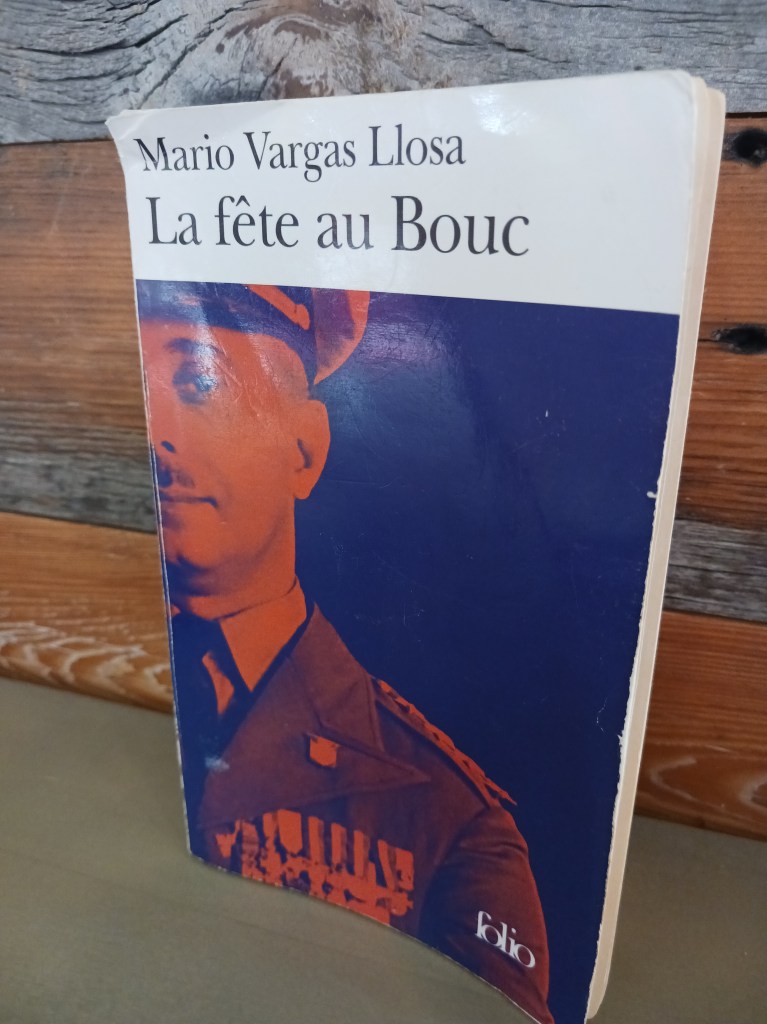
Further reading: 30 years of essays written by Mario Vargas Llosa (in Spanish) https://elpais.com/especiales/2020/mario-vargas-llosa-treinta-anos-de-piedra-de-toque/

 High Park Engineer
Leave a comment